
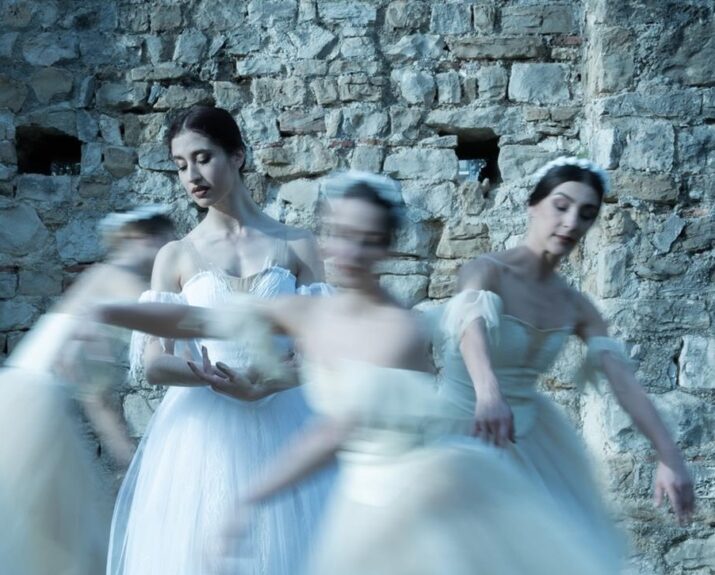
GISELLEAdolphe Adam
Pedagozi polaznika GŠ Josipa Hatzea: Korana Bilan, Miroslava Oravcovà
Polaznike OŠ za klasični balet i suvremeni ples pri OŠ Vežica uvježbali: Jelena Lečić, Alena Medič
Predstava se izvodi uz snimku Orkestra Opere HNK-a Split pod dirigentskim vodstvom Andreja Vesela
The ballet Giselle is an iconic work that, since its triumphant Parisian premiere in 1841, has remained an essential part of the dance world, considered by many to be the most significant achievement of ballet romanticism. Adolphe Adam’s music and the two acts with completely different atmospheres are key elements, along with the unity of music, movement, acting, and dance, that have granted Giselle immortality in the world of “white ballets.”
Giselle marked a turning point in the development of classical ballet. The contrast between the realism of the first act’s story and the fantastical content of the second, or “white,” act, became a model for all subsequent great ballet masterpieces.
The ballet premiered in Paris in 1841. Jules Perrot and Jean Coralli left a deep mark on the history of ballet with their choreography, while the libretto, based on a story about spirits and fairies by the German writer Heinrich Heine, was written by Théophile Gautier, Jules-Henry Vernoy de Saint-Georges, and Jean Coralli.
Synopsis
The ballet is set in medieval Germany. Giselle, a beautiful and free-spirited peasant girl, is in love with an attractive stranger named “Loys,” unaware that he is actually Duke Albrecht, who is betrothed to Princess Bathilde. When the forester Hilarion, also in love with Giselle, reveals his rival’s true identity, tragedy ensues. Giselle goes mad and dies of a broken heart in Albrecht’s arms.
After Giselle’s burial in the forest, her spirit is summoned to join the Wilis—the vengeful ghosts of young girls who died before their wedding day. To seek revenge, the Wilis rise from their graves every night and force any man who crosses their path to dance to exhaustion until he collapses and dies.
When a remorseful Albrecht visits Giselle’s grave, she appears to him as a spirit. He begs for forgiveness, and Giselle, whose love has not diminished, forgives him. However, Albrecht becomes a target of the Wilis, and their merciless queen, Myrtha, forces him to dance. Unwilling to let her beloved die, Giselle protects Albrecht, defending him until the morning bells herald the dawn. The Wilis are then forced to disappear, and Giselle, whose love has transcended death, is forever freed from their power and returns to her grave to rest in peace.